


Why We Make Art, part 2
15 JULY, 2026
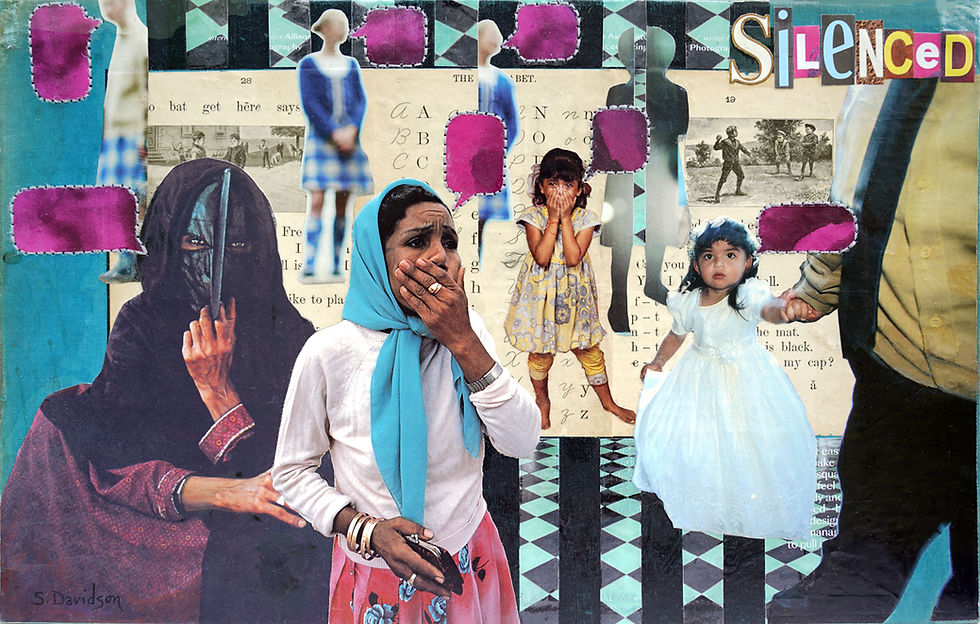
Throughout history, women's voices have been silenced in countless ways. Whether it's being forbidden to speak in public or religious forums, being denied an education or to the right to vote,
or simply told by those in power, "Quiet, piggy", women have been denied
the basic human right of self-expression.
Why Do We Make Art?
As promised, here are even more reasons that we (humans) make art. This is a continuation of the previous post, which grew to be too long after I had only covered about half of the information I found. That said, I'm not at all sure that there aren't more, but these are the ones most often mentioned.
Financial Gain - Wherever I got this one from, I noted that it was followed by the words 'can be a viable livelihood', which I read as 'can be a viable livelihood.' I'm fully aware that people are able to make a living in the arts in many capacities. I also have to note that it may be more difficult and/or less secure than a lot of other careers.
"So what do artists want? They simply want to do what they love: sell work to collectors who will adore and care for one-of-a-kind pieces. They want to make a living wage, like anyone else." - Stephanie Greene
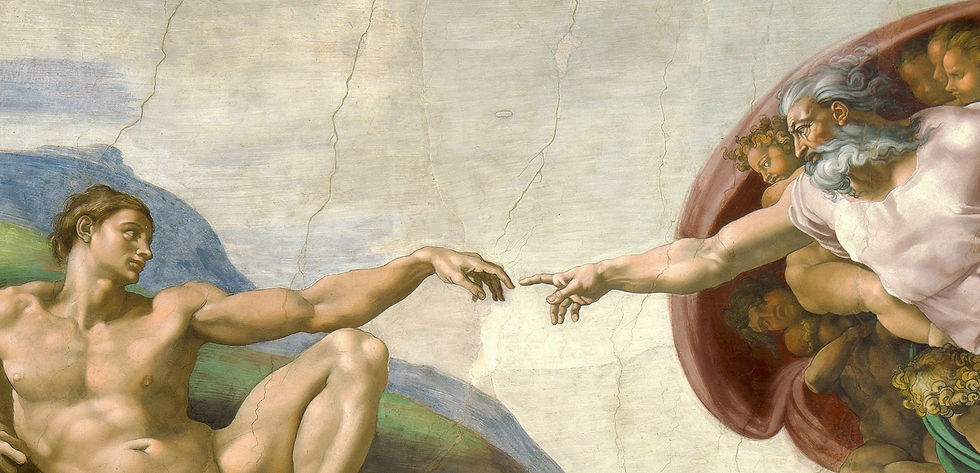
Immortality - Art remains, presumably, to leave a legacy after the artist is gone. Does anyone really think about immortality when deciding to become an artist? It doesn't seem like it would weigh heavily in anyone's 'pro's and con's' list, but I guess it could be a bonus, when all is said and done.
I think it probably depends on how much time has gone by since the artist was alive, and how celebrated the artist was in his/her lifetime. (Not always, of course; Van Gogh and Hilma af Klint are two cases in point.) For example, I suppose no one will forget Michelangelo, but do we know the names of singers, actors, or dancers from his time period? And, while the names of Renaissance composers are still known today, they're not familiar to the general public. Lesser known artists, too, have been forgotten.
Recognition and Self-validation - As a artist, it's gratifying to have your efforts and skills recognized or acknowledged in some way. We need to be reassured that our hard work is not in vain. And since the artist makes work to be seen or heard, it's good to know that others enjoy or find value in the experience.
The widespread stereotype is that artists have big egos, but I wonder whether this is always true. Could the egotistical swagger be at least partly due to vulnerability compensation? After all, to be an artist is to put your soft, squishy emotional self out there where everyone can see it. Also, in most creative fields, the artist must sell themselves as a brand; projecting confidence is very important, even if we don't feel it on the inside.
Self-knowledge/Personal Growth - This is closely related to number 6, healing and catharsis. Not only do we learn about our inner worlds and deepest selves, but through the art-making process, we challenge ourselves. Solving problems in the act of making changes us, I believe, and we grow as human beings.
"...if you don’t do some kind of art or self-expression, then it seems you can’t live a fully explored life…. you can’t really get to know yourself.
So why should we make art – because in this moment it is an essential extension of your exploration of you!" - Amanda Lee
"Practice any art, music, singing, dancing, acting, drawing, painting, sculpting, poetry, fiction, essays, reportage, no matter how well or badly, not to get money and fame, but to experience becoming, to find out what's inside you, to make your soul grow." - Kurt Vonnegut
Artists: Leonora Carrington, Johfra Bosschart, Max Ernst, Stephanie Pui-min Law
To Make Our Own World - Certainly all artists are making their own worlds, or at least re-interpreting the one we live in through their own lenses. Being able to create my own world is one of the things that drew me into art-making as a child. I loved to draw maidens in long gowns, knights, and horses, and make up stories about them. There is a wonderful freedom in creating a universe from your own mind and hands.
"To create a work of art is to create the world." - Wassily Kandinsky
"Everything you can imagine is real." - Pablo Picasso
"The Annuciation" by Poussin; 'Ishtar' ancient relief carving; 'The Shaman' 30,000 year-old cave painting, Lascaux, France; 'Venus of Willendorf', 40,000 year-old stone carving
To Access the Sacred - The earliest art we know of was, arguably, made for spiritual and/or religious reasons. Throughout early civilization and up until the Renaissance, almost all art could be said to be religious in nature and purpose. In the modern era, the connection shifted inward. Artists like Hilma af Klint, Wassily Kandinsky and Mark Rothko explored spirituality through abstract forms and colors.
The act of creating is transformative. Something sacred happens when you create; in some indefinable way you are connecting to something larger than yourself, whether you call it the universe, all of humanity, or a divine presence.
“The true use of art is, first, to cultivate the artist’s own spiritual nature.”

“It is not art in the professionalized sense about which I care, but that which is created sacredly, as a result of a deep inner experience, with all of oneself, and that becomes ‘art’ in time.” -Alfred Stieglitz

The Silent Prairie, mixed media collage onbook cover, 14.5 x 9 in
Having lost a third of all birds since 1970, North American bird populations are declining faster than ever before, according to new studies. My collage focuses on the sad task of researchers
as they tally increasing numbers of dead birds, lost due to pesticides, habitat loss,
and other environmental factors.
“My goal as an artist is to create art that makes people look at the world in a different way.” - Autumn de Forest
Social/Political Commentary - Artists are part of the society they live in, and the arts have always been instrumental in the development of social and political change. We are still, and probably always will be, as Kurt Vonnegut asserts, the canaries in the coal mines. It isn't the only purpose of art, but it is perhaps one of the most important ones.
I've written about it in several blog posts, most notably here, here, and here. For the last nine years, I have participated in the annual SOS Art: Creative Vehicles for Peace and Justice exhibition at the Cincinnati Art Academy. The two large collages in this post are pieces I made for this year's exhibit. Click on the link above to see the many powerful and exciting works in this year's show.
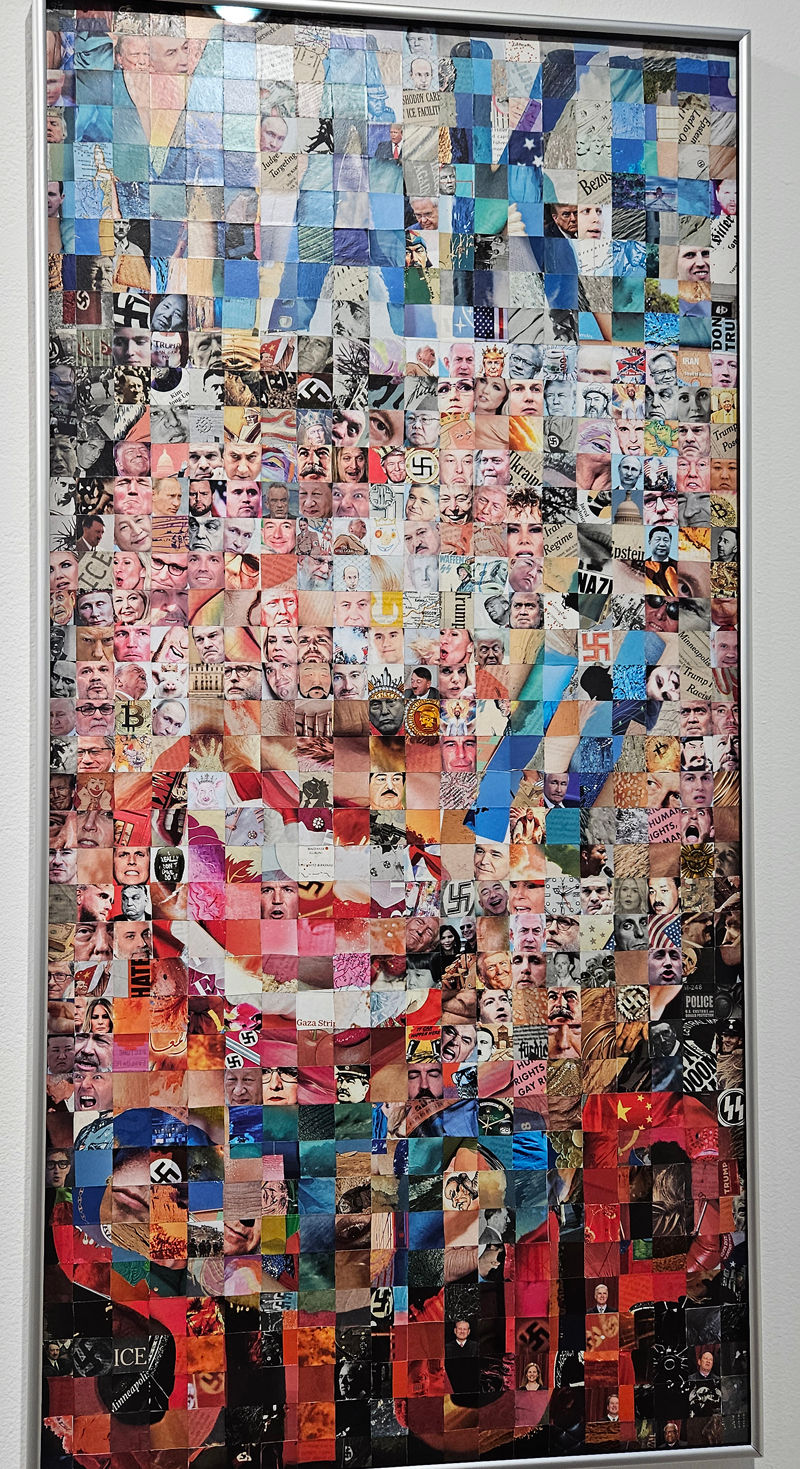
Make it Stop, cut paper collage, 40x20 in by Beth Brann (from SOS Art 2026)
The final purpose of art is to intensify, even, if necessary, to exacerbate, the moral consciousness of people. - Norman Mailer

Childhood's Crucifiixion, assemblage, 15x10.25 in, by Sandy Litteral
"I wanted to start a revolution, using art to build the sort of society I myself envisioned." - Yayoi Kusama
"And we make stuff. My god, the way we keep on making stuff. Because we can and we have to. Because it’s the only damn thing that feels right when everything else feels a hundred kinds of wrong." ― Jeanette LeBlanc

Me working at my drafting table, photo credit: Colin Reusch
Because You Have To - If I had to choose one, this would rank as my most favorite reason. I don't know who I would be if I didn't make art, but it wouldn't be me. To illustrate, I'll share an anecdote from my college days.
When I was working on my BFA, I had to take a photography class. This was way back in ancient times when you had to actually develop the film and print your own photographs. My instructor liked my work, but she always thought my prints were a bit too contrast-y for her taste. I explained that it might be because I have weird eyes - I was farsighted and had ambliopia (lazy eye) as a child, leaving one eye much weaker than the other - which meant my depth perception wasn't as good as most people's.
A young man in the class asked, "Why would you choose to be an artist if your eyesight isn't good?" I started laughing. At his quizzical expression, I explained, "It's just so funny that you think it's a choice."
"Art is not a job; it is a life. It is what you do when you get up in the morning and what you continue to do all day - through headaches and phone calls, silences and celebrations. It is what you keep doing after dark and when you can't sleep at night." - Louise Bourgeois
I would love to read your comments about why we make art! Which of these reasons resonates with you, or do you have some that I didn't think of?
Wishing you all peace, love, and art.


Comments